Game-ready foundations
Reusable building blocks for game state, dependable timing, input, settings, accessibility, saves, progression, effects, sharing, and replay-aware systems, ready to be shaped around the game instead of rebuilt from zero.
SaratogaKit is the game-production framework, SDK layer, and working methodology used by Saratoga Games, NullHaven and Arpie Studio. It gives coding agents durable project context, reusable runtime foundations, connected specialist capabilities, and explicit quality gates.
SaratogaKit is owned by Saratoga Games, which also owns Smaz Games. It was founded by Sean Wyngaard (Saratoga Games) and Torean Joel (NullHaven).
 FrameworkSDKMethodology
Most coding assistants begin with the current prompt. SaratogaKit gives a game project a governed production environment that survives beyond it: the creative brief, player experience, accepted decisions, rejected directions, build targets, specialist responsibilities, and proof of work remain connected from one session to the next.
Its framework governs context and process. Its SDK supplies reusable game systems and platform adapters. Its methodologies define how the creative and technical work is reviewed, rejected, revised, and prepared for release.Saratoga Games and NullHaven develop and release games with the kit.
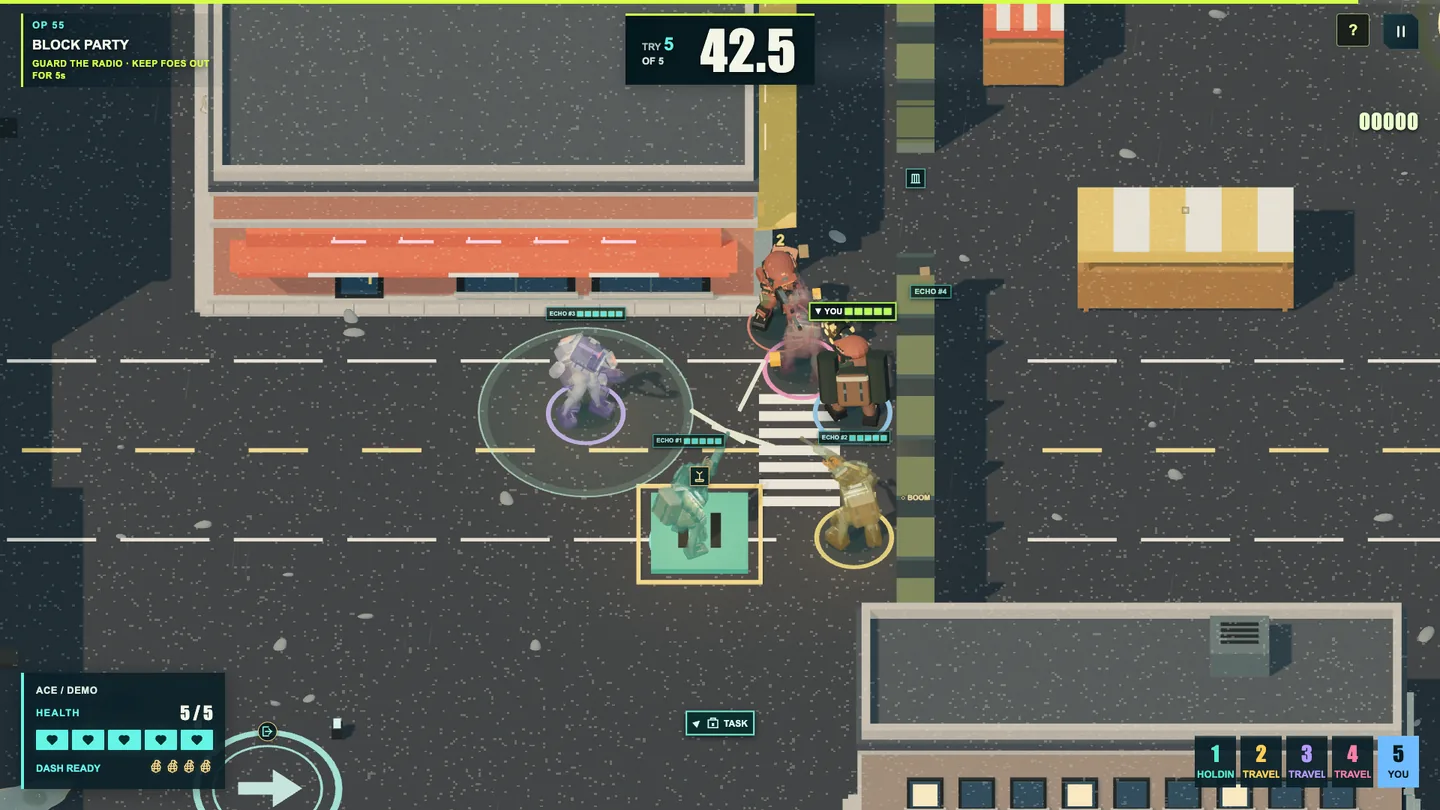 PLAYABLE SYSTEM / 01
Replay top-down assaults with a squad made from your earlier runs. Use up to five tries to hold switches, open gates, rescue captives and reach extraction. SaratogaKit handled the recorded-run replay, the five-try timeline and the objective zones.
Why use a framework?
A blank chat can produce code. It cannot, by itself, preserve product intent, protect the latest decision, choose the right technical approach, safeguard saves, inspect artwork, test a thumb interaction, or recognize when the result is not good enough.
SaratogaKit supplies the operating intelligence around AI-assisted development. It translates creative intent into an executable brief, gives the work durable context, delegates specialist tasks to the right capabilities, and requires evidence before any build earns the word ready.
The owner sets the vision and exercises taste. Kit-directed agents translate that direction into technical decisions, production work, evidence, and revisions.
Start in ordinary language. A short idea is enough. SaratogaKit’s purpose-built agent workflow translates it into a focused production brief: the fantasy, the repeatable loop, the first satisfying moment, the audience, the controls, the look, and the smallest version worth playing.
Before producing a mountain of content, the riskiest interaction, camera, attachment, layout, or technical assumption is tested with representative artwork. Weak foundations are rejected early, when changing direction is still cheap.
The game grows through visible, reviewable increments. Controls, saves, settings, loading, art, sound, and feedback are treated as one product experience, not separate departments that meet at the end.
Kit-directed QA agents exercise the built result through real input, failure, retry, pause, resize, save, and resume paths. They inspect the rendered game at the sizes players will use while keeping human judgment separate from automated evidence.
Code compiling is not completion. The relevant quality gates, title-specific behavior checks, asset checks, privacy checks, visual inspection, and final artifact review must agree, or the build stays in revision. An independent reviewer scores each game out of 10 against a target of 7.5 and hands the builder a plan to get there. If a build falls short, you see why, item by item, and decide what happens next.
The same gameplay source is prepared for its actual home, then served and tested as that final edition. A successful local build is never mislabelled as platform approval, player acceptance, or proven retention.
The kit adapts to the game. It does not force every idea into the same engine, art style, interface, progression model, or release destination.
Reusable building blocks for game state, dependable timing, input, settings, accessibility, saves, progression, effects, sharing, and replay-aware systems, ready to be shaped around the game instead of rebuilt from zero.
The idea becomes a player fantasy, repeatable loop, emotional direction, progression, and coherent world. A living decision record keeps the latest creative direction in charge and prevents rejected ideas from quietly returning.
Kit-directed creative agents establish a fitting visual language, produce and correct artwork, prepare runtime assets, inspect silhouettes and motion, and keep source history and usage evidence attached to the work.
Sound effects, voices, ambience, and music are planned as part of the game, not pasted on at the end. The workflow covers sourcing or generation, editing, rights, formats, mixing, looping, mute, pause, and runtime playback behavior.
The agent workflow can orchestrate specialist capabilities through standard tool connections, including MCP where available. Research, asset work, runtime inspection, and evidence gathering remain inside one directed production loop without tying the kit to a single provider.
Real keyboard, mouse and touch input is tested automatically across phone, tablet and desktop sizes; trackpad, controller and physical-phone checks are done by a person.
Checked builds for your website, itch.io, CrazyGames, Poki and GameDistribution. Steam, Reddit and native mobile are supported as porting routes, not one-click exports.
Project state, accepted decisions, rejected approaches, build targets, evidence, and handovers become durable production memory. Kit-directed agents resume from the latest accepted truth instead of reconstructing the project from a long chat every time.
Describe the experience you want. Review what players will actually see and feel. Make the meaningful creative calls.
Kit-directed agents derive the brief, choose an approach, create the build and assets, coordinate specialist capabilities, inspect the work, correct failures, and present a playable result.
It carries decisions forward, separates evidence from claims, keeps private production context contained, and defines what must happen before “done” means anything.
SaratogaKit is designed to resist the false confidence of a happy-path demo. It separates automated proof, agent inspection, owner approval, and platform acceptance instead of collapsing them into one vague “pass.”
SaratogaKit is used by Saratoga Games, NullHaven and Arpie Studio. Access is currently invite-only, with one licence per person on up to 2 Macs. Get in touch to apply or hear about the public release.
Saratoga Aurora is being developed as an MCP-connected toolset. Your own AI coding agent, Codex or Claude Code, connects to the kit’s tools: the game’s brief and decisions, stage checks, the game’s own eyes for testing, reviews, release checks and insights. The Studio is the dashboard where you see each build, answer its questions and approve it. Licensed access is for one person on up to 2 Macs.
Explore the kitAccess is currently invite-only.
 Saratoga GamesSquad of One · Fintopia · Caveman Taxi · Super Air Hockey · BuyoutInc · GridIncNullHavenBlob Hop · Island Keeper · The Signal
 Arpie StudioCape Town
 Saratoga Games owns Smaz Games, where its titles are played
SaratogaKit already helps you make, review and ship browser games. Next, its AI will handle the after-launch publishing work for your own games, end to end.
The AI will prepare listing copy, cover and gameplay-video variants for each portal, then read the results and recommend what to fix first.
It will plan measurements for click-through, the first-minute funnel and day-1 return, recorded by your game’s own tracking.
The AI will report retention on days 1, 7 and 30, session length and a funnel for each build, using your game’s own Google Analytics or Mixpanel data.
It will forecast each player’s value and state the uncertainty. Every number will say where it came from.
The AI will make short gameplay videos, ad-sized cuts, covers and playable-ad builds, with variants for testing.
Videos will use real gameplay. The kit will not fake footage.
The AI will plan ad placement and frequency for each destination, and design an in-game economy model with a simulator.
It will use A/B tests through your game’s own tracking, propose improvements from the results and build them.
The AI will manage scheduled events, content drops and settings shipped with each update.
It will use the numbers to propose the next update, build it and write the release notes.
The AI will translate into your chosen languages and prepare listing copy and keywords for each language and destination.
You will choose the languages and destinations you want to reach.
The AI will produce a regular report on genres, portal trends and gaps, using public sources.
The report will feed the next game’s idea and help decide the next update.
You keep your accounts and stay the publisher. The AI will work on your own games.
SaratogaKit will not fund or back games, run paid ad campaigns, or submit games to app stores.